Hernandez Plantation
Long before Palm Coast was developed, this area was home to extensive plantations owned by Joseph Marion Hernandez. This article looks at where those plantations were located, how they operated, and what remains of them today.
Joseph Marion Hernandez and Early Flagler County
The Palm Coast Historical Society is dedicated to exploring our history and learning about the events and individuals who shaped this area. One of those individuals was Joseph Marion Hernandez. In addition to
being the first delegate to the US Congress from the Territory of Florida and serving as Brigadier General of the Militia of Florida, in the early 1800s Hernandez also owned three large plantations in what is now known as Flagler County.
Plantations That Shaped the Landscape
Many are familiar with Hernandez’s Bella Vista and Mala Compra plantations. Bella Vista was located in present-day Washington Oaks State Park. Mala Compra was located in present-day Bing’s Landing. Ruins from this plantation house were uncovered during a construction project in the 1990’s and are preserved under a pavilion at the park. These two plantations mainly cultivated oranges, indigo, and cotton.
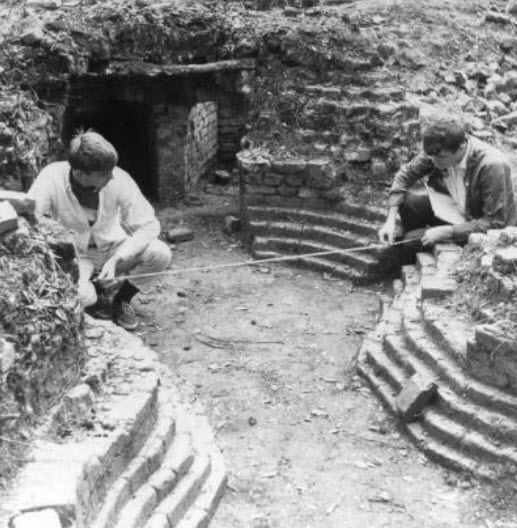
Less well-known is Hernandez’s St. Joseph’s plantation once located in present day Palm Coast at the corner of Old King’s Road and modern-day Palm Coast Parkway. Plantation ruins were still visible in the 1960s when local resident Reece Moore led a Boy Scout excavation project. Unfortunately all remnants of this historic plantation were lost when ITT excavated the site in the early 1970s to create homes, streets, and commercial sites for their newly planned community.
From Plantation to Planned Community
Historical research has revealed that in the area now occupied by the Island Walk Shopping center Hernandez owned an 800-acre agricultural operation primarily focused on sugar cultivation and refinement. The sugar mill is said to have included a two-story coquina structure with a huge brick chimney.
The plantation is also believed to have had an extensive network of roads and canals. The process of growing cane and converting it into sugar, molasses, and rum are labor intensive activities. Historians believe Hernandez acquired as many as 80 enslaved people to work the fields and sugar mill. The plantation remained in operation until shortly after the Second Seminole War began in 1835.
Eventually this plantation and others in the region were abandoned, looted and burned. As we approach the 50-year anniversary of Palm Coast’s founding and the 20 year anniversary of our incorporation as a City it’s appropriate to pause and reflect on the people who impacted this area prior to our arrival.