Palm Coast, Jan 1970
In January 1970, Palm Coast did not yet exist as a city, or even as a place someone could visit. It was still an idea, taking shape in the sand, pine flatwoods, and marshes of northern Flagler County. It would be nearly November before the first visitors found their way to Palm Coast, stepping into a sales office long before there was a town to match the promise.
City Still on the Drawing Board
A front-page article in the Daytona Beach Morning Journal reported that ITT-Levitt’s massive Palm Coast project was moving forward, although weather delays had pushed the opening of its first sales office and model homes to June 1. Heavy winter rains had slowed early construction and canal dredging, according to Levitt officials.
Even so, the scale of what was being planned was striking.
A Development Measured in Counties
At the time of the article, ITT-Levitt had purchased, or held options on, nearly all of the land involved in the Palm Coast project. The development covered roughly 102,000 acres between US 1 and the Atlantic Ocean, north of Flagler Beach. Its footprint extended beyond Flagler County into Putnam and St. Johns counties, including approximately five miles of ocean frontage.
We Expect Palm Coast to be successful and we’re doing a hell of a lot to make it so.
Daytona Beach Morning Journal, 19 Feb 1970
-ITT/Levitt Management
Palm Coast was not envisioned as a single subdivision. Instead, Levitt planned five to seven villages, each intended to function as a self-contained community. Home styles, lot sizes, and prices would vary, both between villages and within them, reflecting Levitt’s intent to attract buyers with a range of budgets.
Big Budgets and Long Timelines
Levitt budgeted $18 million for its first year in Flagler County, with $10 million spent on land acquisition alone. Construction plans were ambitious but deliberately phased.
The company expected to build 108 homes within the first eight months, though officials cautioned that a full-scale building program would take three to five years to unfold. Initial homes were planned for 85-by-125-foot lots, although Levitt noted that final lot sizes would depend largely on buyer preferences.
Construction, as much as possible, was to be handled by Levitt itself, using local contractors where feasible.
Infrastructure Before Neighborhoods
Infrastructure planning dominated the early stages of Palm Coast’s development.
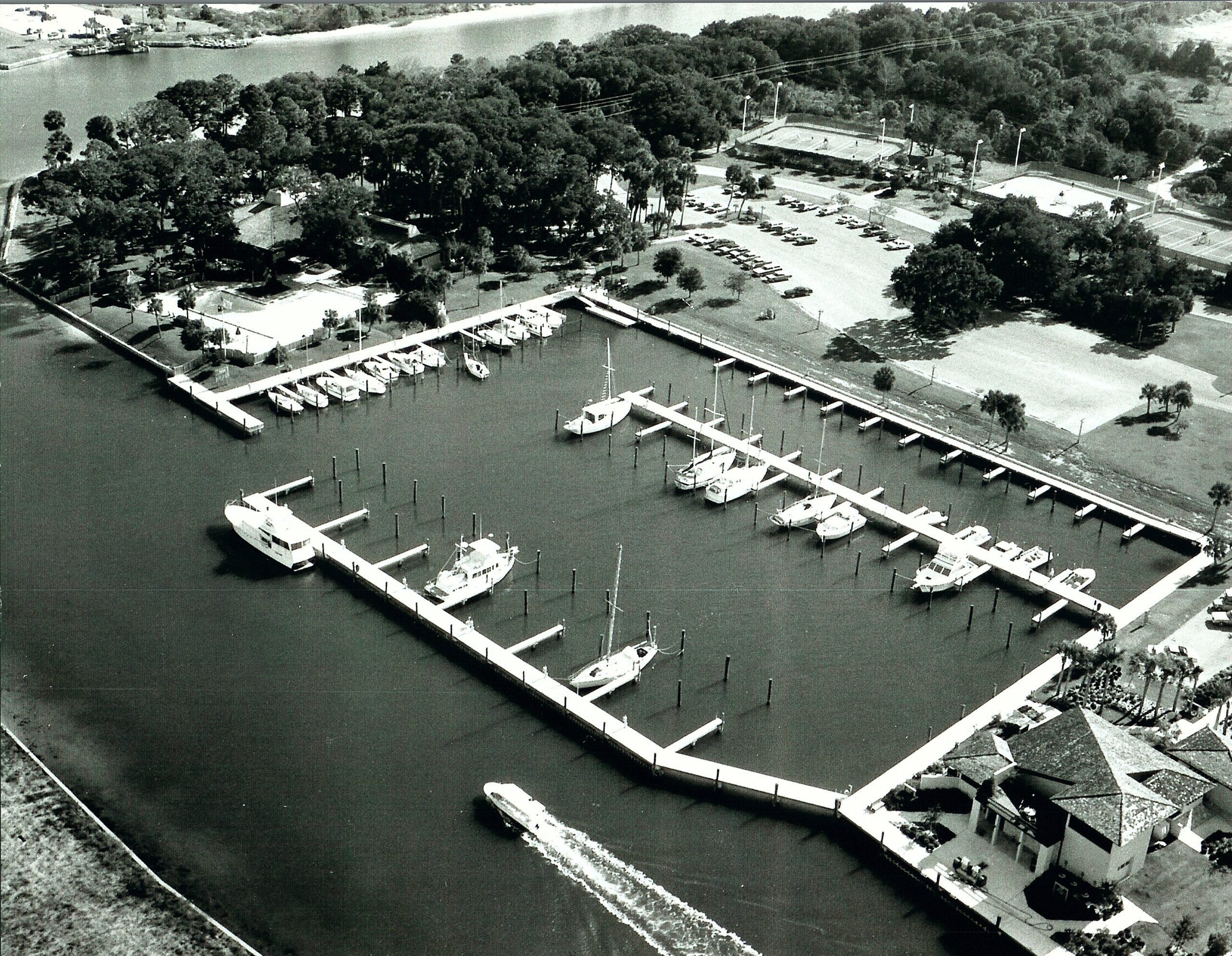
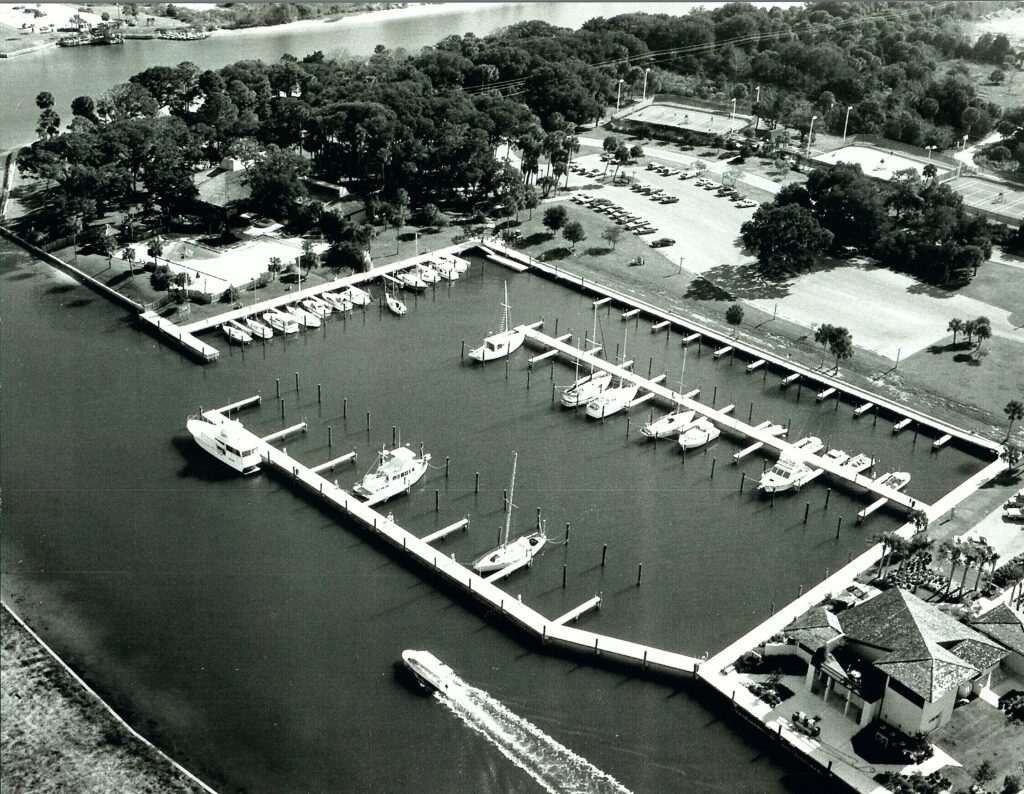
Canal dredging near the Intracoastal Waterway had begun, with a marina planned near the St. Joe Grade.
Levitt also proposed a complete sewage disposal plant, to be developed in cooperation with state health officials. This emphasis on utilities and systems underscored the company’s intention to build a fully planned community rather than a piecemeal subdivision.
Transportation was another major focus. The Florida State Road Department had approved plans for an interchange at I-95 and the St. Joe Grade, though final approval from federal authorities was still required. In addition, a high-level bridge over the Intracoastal Waterway was being designed to connect the development to State Road A1A, with construction tentatively scheduled to begin in 1973.
Beyond Housing: Jobs, Tourism, and Marketing
Palm Coast was marketed not only as a residential community but also as an economic center. Levitt officials reported two prospects for industry in the Palm Coast area, which, if realized, were expected to provide about 200 jobs.
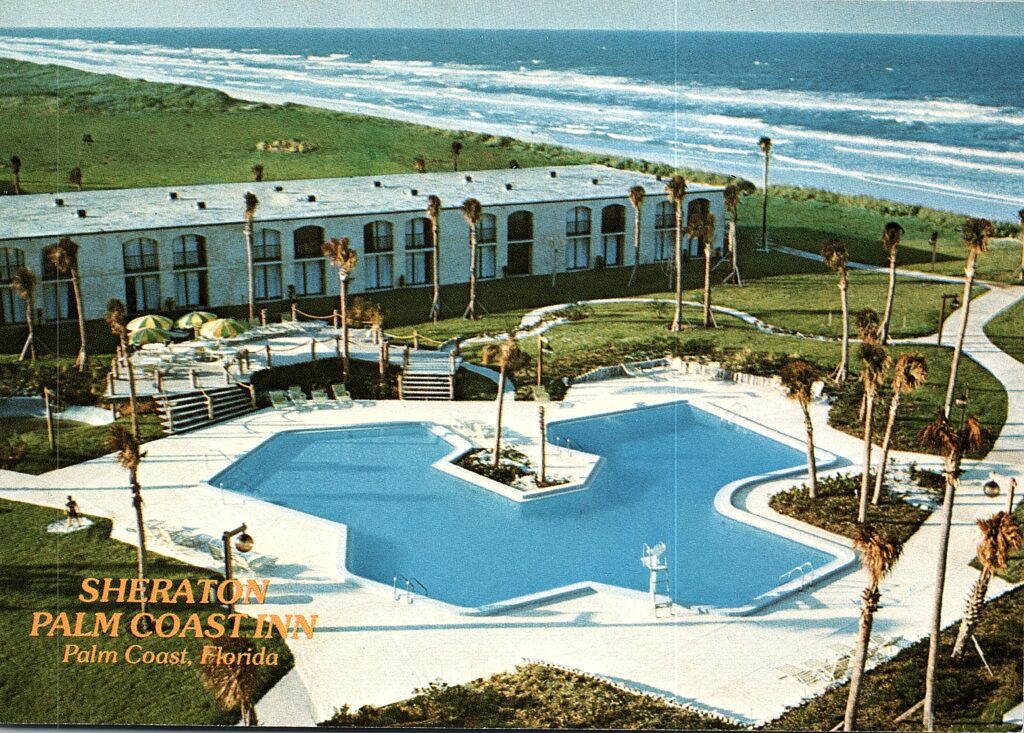
A 150-unit motel was also planned on the ocean side of A1A, just north of Fox’s Cut. Construction was scheduled to begin in June, with completion expected by 1 Jan. 1971. The motel would include a large convention room, reflecting hopes for tourism and conferences.
Sales efforts were equally ambitious. The first marketing push would target retirees in Michigan, Pennsylvania, and New York, but Levitt projected that within seven years, Palm Coast sales offices would operate in all 50 states and several foreign countries.
The sales office itself was designed as a destination, featuring a 40- to 50-foot observation tower so visitors could view the development from above.
A Project Still Taking Shape
Despite the optimism, the article noted that Palm Coast was already running about 40 days behind schedule, largely because of heavy rains. The US Army Corps of Engineers was also expressing reservations about a proposed inlet in the Palm Coast area.
Even at this early stage, the tension between ambition, environment, and regulation was evident.
What stands out today is not just the size of the plan, but the confidence behind it. Long before Palm Coast had residents, schools, or a city government, it had blueprints for villages, bridges, sewage systems, industry, tourism, and nationwide marketing. In January 1970, Palm Coast was not yet a place where people lived. It was a place that had already been carefully imagined.
Source: Daytona Beach Morning Journal, 20 Jan. 1970 and 19 Feb 1970.