The Palm Coast Historical Society Museum documents the origins and growth of Palm Coast, from its earliest planning through the development of the modern city. Through photographs, artifacts, printed materials, and personal accounts, the museum preserves the everyday history of Palm Coast, how residents lived, worked, governed, and built a new community.
The museum emphasizes local experience over abstraction, focusing on the people, places, and decisions that shaped Palm Coast during its formative years. Exhibits reflect residential life, recreation, civic organization, and the cultural identity that emerged as the city took shape.
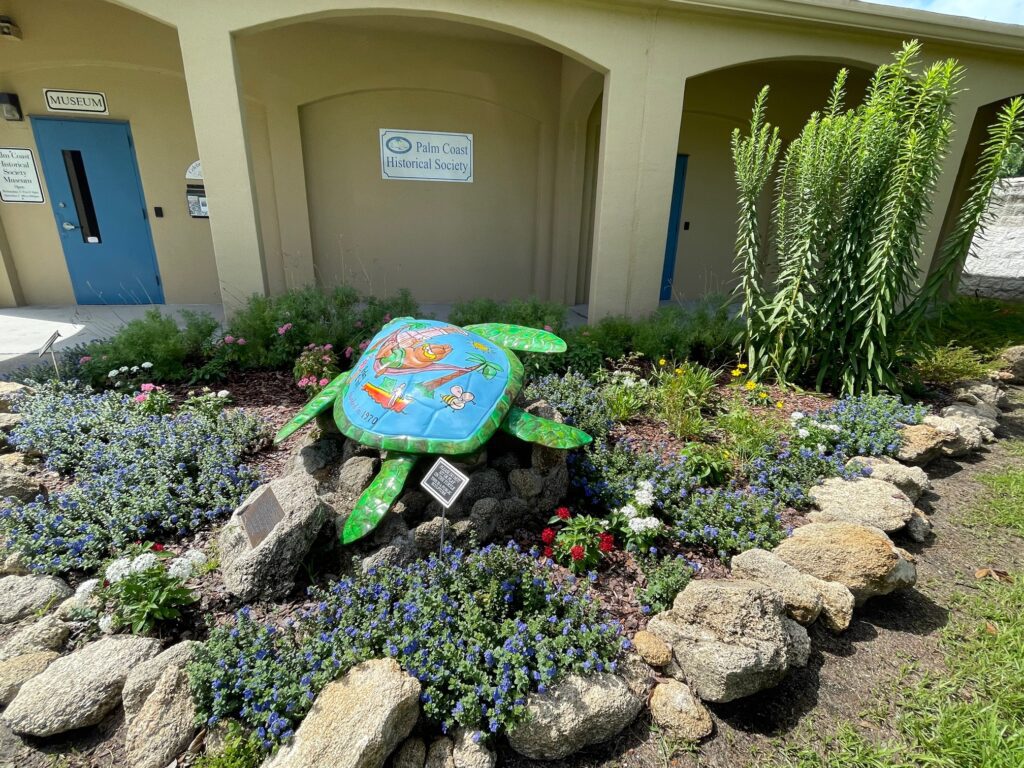
Public Art at the Museum
The museum building itself contributes to the visitor experience. A large exterior mural illustrates key moments in Palm Coast’s history, offering a visual introduction to the city’s development before visitors step inside.
Nearby is one of Flagler County’s decorated public art turtles, inspired by Garfield, who served as a mascot during Palm Coast’s early years. The turtle is part of the Turtle Trail, a public art initiative presented by Flagler Arts and Culture Council, which places artist-designed turtles throughout Flagler County.
This installation reflects how local history, popular culture, and public art intersect in Palm Coast.
See Palm Coast Through the Eyes of Those Who Were There
Visitors can view a video presentation of historic Palm Coast photographs, narrated by the city’s first City Historian, Art Dycke. Drawing on firsthand experience and long-time involvement in documenting local history, Dycke shares stories and context that bring the images to life.
The narration adds personal insight to scenes of early development, community gatherings, and everyday life, making the visual record more immediate and accessible.
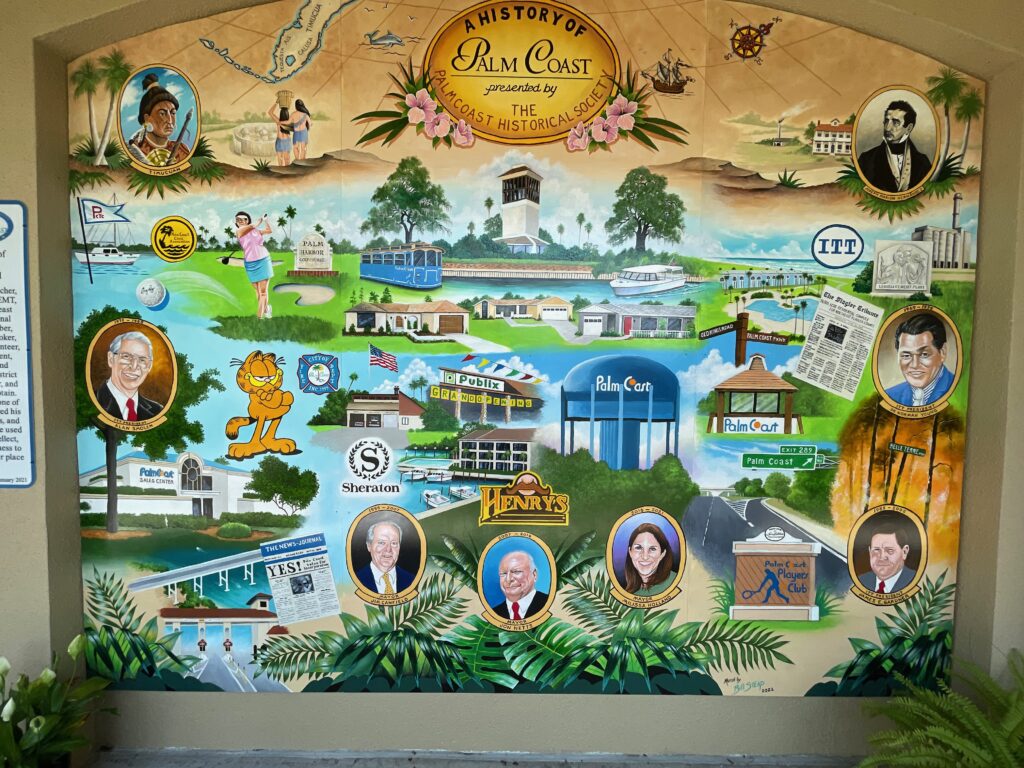
Golf and Tennis: What Drew People Here
Palm Coast’s recreational and athletic life is represented through a growing collection of sports memorabilia. These items reflect the role of organized sports, clubs, and leisure activities in building community connections and local identity. Sports exhibits highlight Palm Coast’s connection to golf through Nancy Lopez, whose career and community ties reflect the city’s recreational roots and national sports presence.
Early Palm Coast Timeline
A central feature of the museum is a timeline of early Palm Coast, guiding visitors through key milestones in the city’s development. This exhibit places local events in context, highlighting planning decisions, early neighborhoods, infrastructure, and the transition from undeveloped land to an organized community.
Historic photographs, documents, and interpretive text help visitors understand not just what happened, but when and why Palm Coast developed as it did.
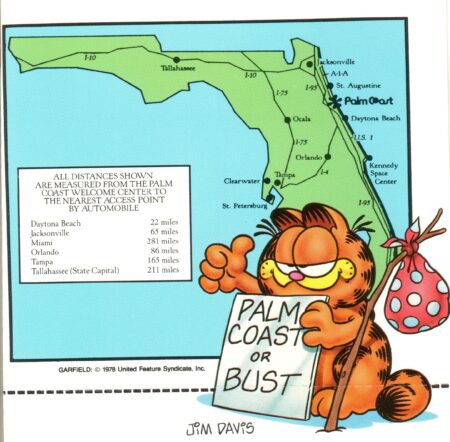
Garfield the Cat: Early Spokesman
The museum includes a display featuring Garfield, who served as a spokesman during Palm Coast’s early years. Used in promotional and community contexts, Garfield became part of the city’s early visual identity and remains a recognizable symbol tied to Palm Coast’s history.
This display explores how popular culture and marketing intersected with city building, and why a nationally known cartoon character became associated with a new Florida community.
Research Library and Archives
In addition to exhibits, the museum serves as a resource for community education and historical awareness. By preserving original materials and sharing local stories, the Palm Coast Historical Society Museum supports a deeper understanding of how Palm Coast developed and how its past continues to shape the present.
Adjacent to the museum is the Society’s research library and archival office, which houses historical records, photographs, documents, and reference materials related to Palm Coast history. This space supports local historians, genealogists, students, and others conducting focused research.
The research library and archives are available by appointment. Please contact the office to schedule access.
Join us on Wednesday and Saturday afternoons 1:00-3:00
Located at James F. Holland Memorial Park, 18 Florida Park Drive, Palm Coast FL
The museum is free and open to the public.